
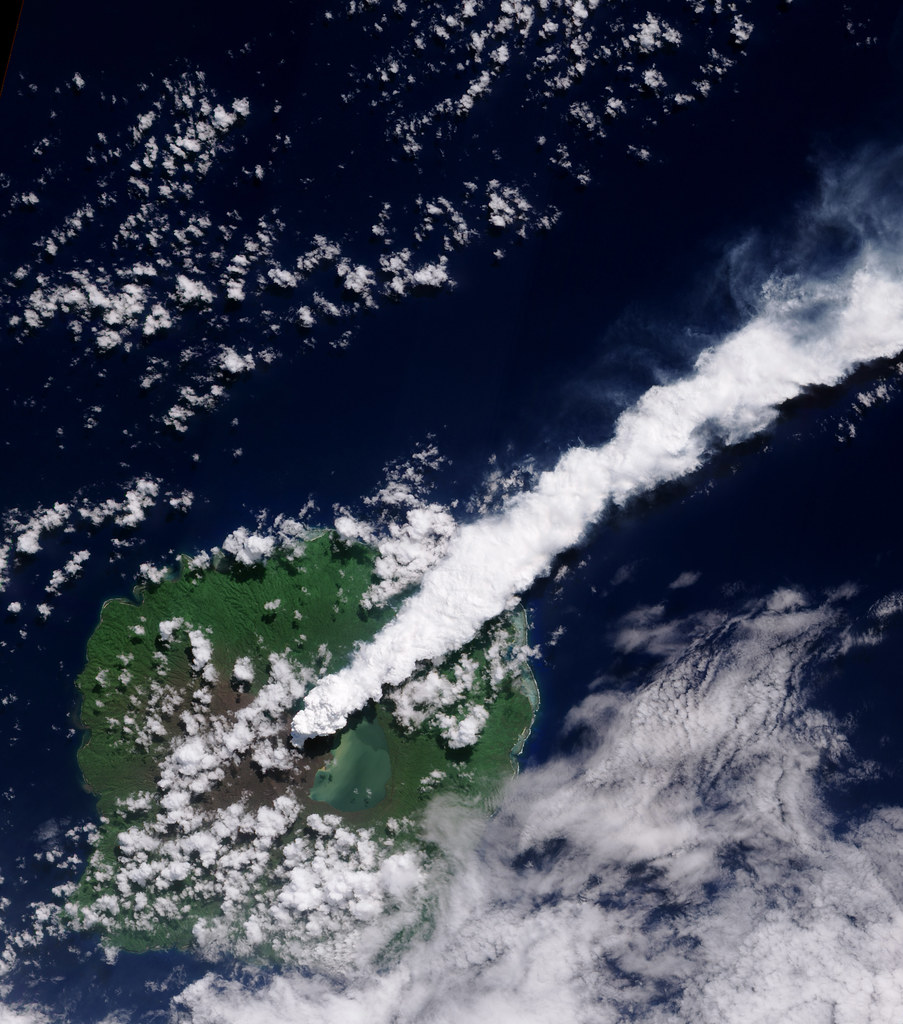
space weather study is now underway as ESA and CAS begin their science operations. This mission aims to deepen our understanding of space weather and its impacts.
Introduction to Space Weather
Space weather refers to the environmental conditions in space that can influence the Earth’s atmosphere and the technology we rely on. Understanding these phenomena is crucial for various sectors, including telecommunications, aviation, and even power grid management. The recent mission by the European Space Agency (ESA) and the Chinese Academy of Sciences (CAS) marks a significant advancement in our efforts to study space weather.
This mission aims to provide critical data on solar activity and its effects on the Earth. The collaboration between ESA and CAS combines expertise and resources, enabling a comprehensive approach to research. By deploying advanced instruments and technology, scientists hope to unravel the complexities of solar winds, cosmic radiation, and magnetic storms.
As we delve deeper into space weather studies, several techniques have proven effective, including:
- Data Collection: Utilizing satellites equipped with sensors to gather real-time information.
- Modeling: Developing simulations to predict space weather events.
- Collaboration: Engaging international partnerships to share findings and resources.
Continued research in this field is essential for mitigating the potential impacts of space weather on our daily lives.
Importance of Studying Space Weather
The study of space weather is crucial for understanding how solar activity affects our planet and technological systems. This growing field has significant implications for various sectors, including telecommunications, aviation, and satellite operations.
Understanding space weather can help mitigate risks associated with solar storms, which can disrupt GPS signals, power grids, and other critical infrastructure. As space weather becomes more variable due to solar cycles, its effects on Earth grow increasingly unpredictable.
Key reasons for studying space weather include:
- Protecting technology: Solar flares and coronal mass ejections can damage satellites and disrupt communication networks.
- Enhancing safety: Airlines and astronauts need to be aware of increased radiation levels during solar events.
- Improving forecasting: Predictive models can help prepare for space weather events and reduce economic losses.
- Advancing scientific knowledge: Studying these phenomena can deepen our understanding of the sun-Earth relationship.
Ultimately, a comprehensive space weather study not only safeguards our technology but also expands our grasp of the universe, making it an essential area of research in the modern age.
ESA and CAS Mission Overview
The European Space Agency (ESA) and the China Academy of Sciences (CAS) have launched a collaborative mission aimed at enhancing our understanding of space weather. This initiative is particularly significant as it marks a joint effort to explore how solar activity impacts Earth’s environment.
The mission utilizes a suite of advanced instruments aboard multiple satellites, designed to monitor solar phenomena and their effects on our planet. Key objectives include:
- Real-time monitoring: The satellites will provide continuous data on solar flares, coronal mass ejections, and other space weather events.
- Data analysis: Utilizing cutting-edge algorithms, researchers will analyze space weather patterns to predict their potential impacts.
- International collaboration: This mission fosters partnerships between European and Chinese scientists, promoting a global approach to space weather study.
By combining resources and expertise, ESA and CAS aim to improve predictive models and enhance our preparedness for space weather-related challenges. This mission is a vital step towards a deeper understanding of the complex interactions between solar activity and terrestrial systems, ultimately benefiting various sectors, including telecommunications and aviation.
Key Objectives of the Mission
The key objectives of the mission are critical to advancing our understanding of space weather phenomena. This initiative aims to enhance the predictive capabilities of space weather forecasts, which are essential for safeguarding satellite operations and communication systems.
To achieve this, the mission focuses on several primary goals:
- Data Collection: The mission will gather comprehensive data regarding solar winds, solar flares, and cosmic rays.
- Model Development: Researchers aim to develop sophisticated models that can accurately simulate space weather conditions.
- Collaboration: The project encourages international collaboration to share findings and technologies, fostering a unified approach to space weather study.
- Public Awareness: By disseminating knowledge gained from the mission, the initiative seeks to increase public awareness of space weather impacts on daily life.
Through these objectives, the mission will significantly contribute to the field of space weather study, ultimately improving the safety and reliability of space-based technologies and infrastructure.
Technological Innovations in Space Research
Recent advancements in technology have significantly enhanced the capability to conduct a comprehensive space weather study. These innovations are crucial for understanding the complex interactions between solar activity and Earth’s magnetosphere.
One of the most notable technological developments includes the deployment of advanced satellite systems equipped with high-resolution sensors. These sensors allow researchers to collect real-time data on solar flares and coronal mass ejections, providing a clearer picture of potential impacts on Earth.
Additionally, machine learning algorithms are being utilized to analyze vast amounts of data generated from these observations. This approach not only accelerates the data processing time but also improves the accuracy of forecasts related to space weather events.
Moreover, international collaboration has led to the creation of a global network of observatories. These facilities share critical information, enhancing the overall understanding of space phenomena.
Finally, public engagement through educational initiatives is also on the rise, helping to raise awareness about the importance of space weather research and its implications for technology and society.
Expected Outcomes of the Study
The expected outcomes of the space weather study are pivotal for advancing our understanding of solar phenomena and their impact on Earth. Researchers anticipate gaining insights into various aspects of space weather, which will enhance predictive capabilities and improve safety for both technology and human activities in space.
Among the anticipated results, the following are particularly noteworthy:
- Improved Forecasting Models: The study aims to develop more accurate models that can predict solar storms and their potential effects on Earth.
- Understanding Solar Events: A deeper comprehension of the mechanisms behind solar flares and coronal mass ejections (CMEs) is expected, which will aid in mitigating risks.
- Impact on Technology: Findings from the study may lead to enhanced protection measures for satellites and other space infrastructure against space weather disruptions.
- Public Awareness: Increased public knowledge about space weather phenomena and their implications for daily life is another goal, fostering a more informed society.
Ultimately, these outcomes will contribute to not only scientific knowledge but also practical applications essential for the safety and efficiency of space operations.
How Space Weather Affects Earth
Space weather plays a critical role in influencing various phenomena on Earth. The interactions between solar winds, magnetic fields, and the Earth’s atmosphere can have profound effects on technology and the environment.
One of the most significant impacts of space weather is on communication systems. Satellites that facilitate global communications are susceptible to disruptions caused by solar flares and geomagnetic storms. These events can lead to signal degradation and loss of functionality, affecting everything from GPS navigation to internet services.
Additionally, space weather poses risks to electrical grids. Geomagnetic storms can induce currents that may overload transformers, potentially leading to widespread power outages. This vulnerability highlights the need for robust monitoring systems to mitigate risks.
Moreover, space weather can also affect aviation. High-altitude flights, particularly those over polar regions, may experience increased radiation exposure during solar events, necessitating route adjustments for safety.
Understanding these impacts is crucial for developing effective strategies and technologies to protect both infrastructure and human health, underscoring the importance of the ongoing space weather study.
Future of Space Weather Research
The future of space weather research is promising, with advancements in technology and collaborative efforts paving the way for deeper understanding. As the ESA and CAS mission progresses, researchers are optimistic about the potential breakthroughs that could arise from this space weather study.
One key area of focus will be the development of enhanced predictive models. These models aim to provide accurate forecasts of solar storms and their potential impacts on Earth’s magnetosphere. Researchers believe that integrating data from multiple spacecraft can significantly improve the reliability of these models.
Additionally, the international collaboration between agencies will likely lead to a more comprehensive analysis of space weather phenomena. Key future initiatives include:
- Increased data sharing between global institutions to build a robust database of space weather events.
- Innovative sensor technologies that can monitor solar activity in real-time.
- Enhanced public awareness campaigns to educate communities about the impacts of space weather.
The evolution of research methodologies, combined with global cooperation, will undoubtedly enhance our understanding of space weather and its effects.
The space weather study has revealed significant insights into the interactions between solar activity and Earth’s magnetic field. Researchers are now employing advanced techniques in their space weather study to better predict and mitigate the impacts of solar storms.
By NASA Goddard Photo and Video via Openverse



Leave a Reply